
California’s Department of Health Care Services licenses all eligible drug rehab facilities in the state. But as part of that licensing process, rehabs must also follow the ASAM Levels of Care.
The Levels of Care help facilities assess a patient’s condition and needs to make sure they receive the proper level of care for their unique conditions.
Facilities that fail to use the guideline and allow a patient to suffer harm can be held fully liable for their negligence, and families can sue.
The ASAM Levels of Care Should Not Be Ignored
The Department of California Health Services (DCHS) licenses the drug rehabs in the state that provide medical services and professional counseling. Part of the inspection process involves demonstrating the use of the Levels of Care (LOC) provided by the American Society of Addiction Medicine (ASAM).
Their guidelines are meant to protect patients as they enter a rehab system. The patient is dropped just anywhere. With the Levels of Care, patients are assessed for their physical health, their mental state, and their Substance Use Disorder severity.
Their health is a priority because SUD patients can be dealing with healthcare issues such as diabetes while also battling addiction. They may have a mental disorder that should be treated alongside their detox.
- It’s the best way to help patients enter the treatment program they need most. That can mean facilities with medical care. It can mean inpatient programs or outpatient programs. Their survival often depends on patients getting the right care in the right location.
- Patients who wind up in the wrong facilities can overdose or suffer withdrawal complications without the medical attention they need to survive. They can also hurt themselves and risk death when they aren’t monitored 24/7 in a higher level program.
Following these guidelines isn’t optional to the DCHS. Treatment centers seeking licensing must adopt the LOC or a system like it.
The ASAM Levels Explained
The ASAM LOC is the standard for how facilities are grouped and utilized in a patient’s recovery journey. The ASAM Criteria is a broader guideline that explains how each level of clinic should operate and the focus it should have.
The Levels of Care provide specific guidelines to show what care facilities exist and what each center provides. A large determining factor can be whether those facilities provide medical care. Licensed facilities can offer incidental medical services, but must never offer patients care they aren’t qualified to deliver.
The 4th Edition of the Criteria group facilities like these and others into four main categories with subgroups for each set.
- Outpatient: This is a facility that provides professional care, but patients don’t stay there. They would usually live in their own homes or in a recovery residence. The services can include therapy, medication management, and other recovery services.
- Intensive outpatient: This level offers a higher level of care, but patients still live elsewhere.
- Residential: Patients live in the facility for a limited time.
- Inpatient intensive residential: Patients receive upgraded care and monitoring, as in a detox center.
There’s also a recovery residence, such as a Sober Living Home. These homes aren’t usually licensed. People recovering from SUD live with other SUD patients. They pay rent and have jobs. They only receive peer support and basic accountability and monitoring. Their medical services and professional counseling are received elsewhere.
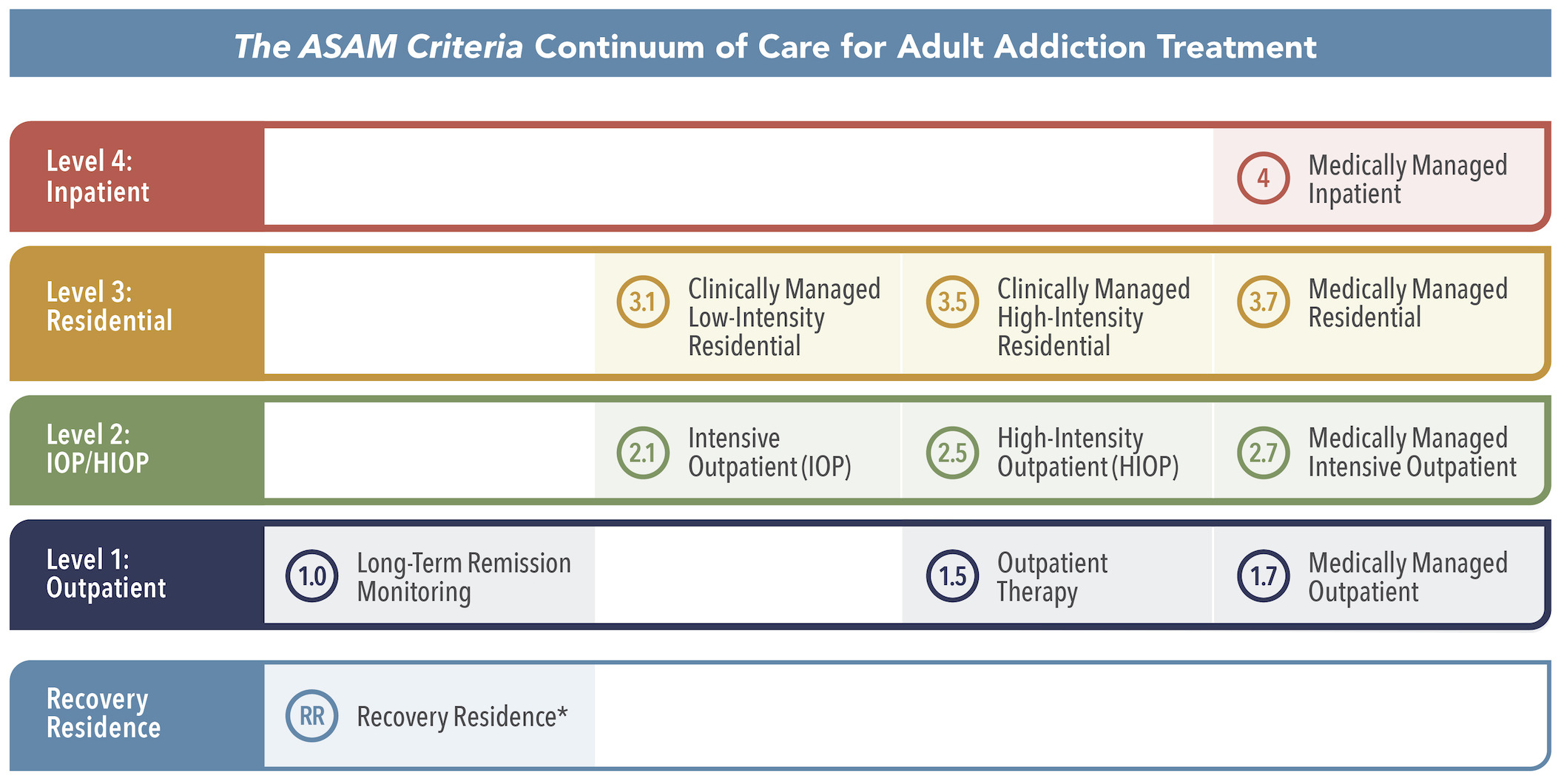
This system of sorting patients is critical for new patients. It’s also extremely important for patients who have completed a program at a higher-level facility, but need to find a lower-intensity program before they are ready to face normal life again.
See: How to determine if a facility is licensed and if they’ve had violations.
Contact Us if Your Loved One Died in a Drug Rehab
Attorney Martin Gasparian offers a free, confidential consultation to families who lost a loved one while they were in a California drug rehab facility.
We want to stand beside families who are standing up for their loved ones who weren’t at fault for their deaths. We take action to hold treatment centers accountable when they don’t follow health standards and state law when protecting patients.
There’s no obligation, but all families should be informed that there are no upfront costs to hire a skilled lawyer. We don’t get paid unless we win your case. Then our fee comes out of the settlement that a drug rehab facility must provide.